
Alternative energy forms the cornerstone of power systems that are cleaner, more affordable, and less dependent on finite resources. Biogas, biomass briquettes, solar, wind, and thorium all reduce supply risks, foster job creation in local economies, and promote reliable energy access in a world shaped by climate pressure and geopolitical uncertainty.
Alternative Energy: 5 Pathways to Sustainable Strength
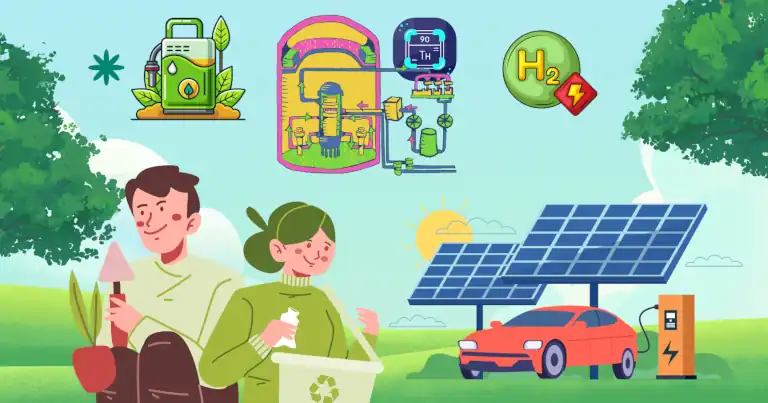
A visual snapshot of how alternative energy pathways, from solar and hydrogen to biofuels and thorium, shape a cleaner, resilient future.
- The Decoder
- Decision Echoes
Table of Contents
Alternative Energy as a Strategic Foundation for a Resilient Future
Alternative energy is no longer a peripheral concept; it has become a strategic necessity for nations seeking stability, sovereignty, and sustainable growth. As global systems face climate pressure, geopolitical volatility, and rising energy demand, alternative energy offers a pathway to cleaner power, diversified supply, and long‑term resilience.
Unlike traditional fossil‑fuel systems that centralise risk, alternative energy distributes opportunity. It empowers rural communities, strengthens national grids, reduces emissions, and creates new economic ecosystems. By integrating biogas, biomass briquettes, solar, wind, thorium, and hydrogen, countries can build a balanced portfolio that is cleaner, smarter, and more secure.
Alternative energy is not just a technological shift; instead, it is a structural transformation that redefines how societies produce, distribute, and consume power. It is the foundation of a future where resilience is not reactive but designed into the system itself.
Biogas: Circular Power for Rural Stability
Biogas remains one of the most versatile and socially grounded pillars of alternative energy. It transforms organic waste into clean fuel, reduces methane emissions, and strengthens rural economies through decentralised energy production. Unlike large‑scale energy systems that require extensive infrastructure, biogas grows from the ground up, using agricultural residues, livestock manure, food waste, and organic slurry.
As an alternative energy source, biogas is uniquely positioned to deliver stability where it is needed most: in rural communities that depend on predictable, affordable, and locally controlled power. Its circular nature ensures that waste becomes input, energy becomes output, and nutrients return to the soil. This closed‑loop system makes biogas not just an energy source but a resilience mechanism.
Gobar Gas: India’s Oldest and Most Trusted Biogas Model
Gobar gas, produced primarily from cattle dung, is the most culturally rooted and widely recognised form of biogas in India. It has powered rural households for decades, offering clean cooking fuel and reducing dependence on firewood and LPG.
Why Gobar Gas Still Matters
- Uses abundant, renewable livestock waste
- Reduces indoor air pollution from firewood
- Provides nutrient‑rich slurry for farms
- Supports household‑level energy independence
Gobar gas is often underestimated because of its simplicity, but its impact on rural stability is profound. It remains the backbone of decentralised alternative energy in many regions.
Community Biogas Plants: Shared Energy, Shared Prosperity
Community biogas plants scale the gobar gas model by pooling organic waste from multiple households or farms. This model provides a more reliable, higher‑volume energy supply that can support entire villages, small businesses, or local institutions.
Benefits of Community‑Scale Biogas
- Economies of scale reduce per‑unit cost.
- Supports local micro‑enterprises.
- Enables piped biogas distribution.
- Strengthens community ownership of energy.
These systems turn energy into a shared asset, thus reinforcing social cohesion and economic resilience.
Industrial Biogas: Waste‑to‑Energy for Agro‑Industries
Industrial biogas plants process large volumes of organic waste from food processing units, sugar mills, breweries, and agro‑industries. They generate biogas at a scale that can power factories, feed into the grid, or be upgraded into bio‑CNG.
Industrial Biogas Advantages
- Converts industrial waste into clean energy
- Reduces waste‑management costs
- Produces bio‑CNG for transport
- Supports corporate sustainability goals
Industrial biogas is a critical bridge between rural waste streams and national‑level energy systems.
Advanced Bio‑Methanation: High‑Efficiency Biogas for the Future
Advanced bio‑methanation technologies use optimised microbial processes, temperature control, and AI‑based monitoring to increase gas yield and reduce processing time. These systems can handle mixed waste streams and produce high‑purity methane suitable for injection into gas grids.
Why Advanced Bio‑Methanation Is Transformative
- Higher methane yield per tonne of waste
- Faster digestion cycles
- AI‑enabled process optimisation
- Compatibility with the national gas infrastructure
This is the future‑ready layer of biogas, which is scalable, efficient, and aligned with modern energy systems.
Biogas as a Pillar of Rural Resilience
Across all its forms, such as gobar gas, community plants, industrial systems, and advanced bio‑methanation, biogas strengthens rural resilience by providing stable, local, and affordable alternative energy. It reduces dependence on volatile fuel markets, supports farmers with new income streams, and creates a circular economy where nothing is wasted.
Biogas is not just an energy technology; it is a social stabiliser, an economic catalyst, and a climate solution woven into the fabric of rural life.
Biomass Briquettes: Clean Fuel from Agricultural Residues
Biomass briquettes are among the most efficient and scalable forms of alternative energy derived from agricultural residues. They convert dry biomass, such as rice husk, groundnut shells, sugarcane bagasse, sawdust, and crop stalks, into dense, uniform fuel blocks that burn cleaner than coal and firewood. As an alternative energy pathway, briquettes reduce open‑field burning, lower emissions, and create new rural industries that strengthen local economies.
Where biogas uses wet organic waste, briquettes utilise the dry fraction of agricultural output. Together, they form a complementary system that ensures every part of the agricultural cycle contributes to energy production. This makes briquettes a critical pillar in the broader alternative energy landscape, especially in regions with abundant crop residues.
The Role of Briquettes in a Diversified Alternative Energy Portfolio
Briquettes fill a unique gap in the alternative energy ecosystem. They provide a solid fuel option that is easy to transport, store, and use across households, small industries, and institutional kitchens. Their high calorific value and low emissions make them a practical replacement for coal, wood, and charcoal.
Why Briquettes Matter
- Convert agricultural waste into clean, usable fuel.
- Reduce dependence on coal and firewood.
- Lower particulate emissions improve air quality.
- Provide a stable, affordable energy source for rural and peri‑urban areas.
Briquettes are especially valuable in regions with inconsistent electricity supply or industries that rely heavily on thermal energy.
Types of Biomass Briquettes and Their Applications
Briquettes fill a unique gap in the alternative energy ecosystem. They provide a solid fuel option that is easy to transport, store, and use across households, small industries, and institutional kitchens. Their high calorific value and low emissions make them a practical replacement for coal, wood, and charcoal.
1. Screw‑Pressed Briquettes
These briquettes are produced using high pressure and heat, resulting in a dense, uniform product with a hollow core that improves combustion.
Applications:
- Industrial boilers
- Brick kilns
- Large institutional kitchens
2. Piston‑Pressed Briquettes
Made using mechanical pressure without external heat, these briquettes are cost‑effective and suitable for small‑scale production.
Applications:
- Household cooking
- Small industries
- Rural micro‑enterprises
3. Biomass Pellets
Pellets are smaller, cylindrical versions of briquettes with higher density and more consistent quality. They are ideal for automated systems.
Applications:
- Pellet stoves
- Gasifier systems
- Industrial heating
4. Torrefied Briquettes
Produced through a mild pyrolysis process, torrefied briquettes have higher energy density and hydrophobic properties, making them suitable for long‑distance transport.
Applications:
- Coal power plant co‑firing
- Export markets
- High‑temperature industrial processes
Environmental and Social Impact of Briquettes
Briquettes deliver environmental benefits that extend far beyond simple fuel substitution. They reduce open‑field burning, which is a major contributor to air pollution, and help conserve forests by replacing firewood. Their cleaner combustion profile improves indoor and outdoor air quality, contributing to public health.
Social and Economic Benefits
- Creates rural employment in collection, processing, and distribution
- Supports farmer incomes by monetising crop residues
- Enables women‑led micro‑enterprises in rural areas
- Reduces time spent collecting firewood
Briquettes transform agricultural waste into a resource that strengthens both the environment and the rural economy.
Briquettes as a Bridge Between Rural Production and Industrial Demand
One of the greatest strengths of briquettes is their ability to connect rural production with industrial energy needs. Small briquetting units can supply local industries, while larger plants can feed into regional markets. This creates a decentralised energy economy where rural producers become energy suppliers.
Strategic Value in the Alternative Energy Mix
- Provides a reliable, solid‑fuel option
- Reduces pressure on fossil‑fuel imports
- Supports decentralised energy production
- Complements biogas, solar, and wind systems
Briquettes are not just a fuel; rather, they are a structural component of a resilient alternative energy ecosystem.
High‑Intensity Thermal Applications and Industrial Power Generation
In many industries, biomass briquettes are used for high‑intensity thermal applications such as boilers, furnaces, dryers, and kilns. Their consistent calorific value allows factories to generate reliable thermal energy, which can then be converted into electrical power for internal use. This electricity often supports essential operations such as basic lighting, office equipment, and the electrical load of effluent treatment plants, where stable power is critical for pumps, aerators, and monitoring systems.
In several Indian states, industries that generate more power than they consume are permitted to supply surplus electricity to adjacent units or feed it into the local grid. This transforms briquette‑based thermal systems into decentralised power hubs, strengthening regional energy security while reducing dependence on fossil‑fuel‑based electricity.
Solar and Wind: Renewable Engines of National Transformation
Solar and wind power have become the most visible and rapidly expanding pillars of alternative energy. Their scalability, declining costs, and compatibility with digital optimisation tools make them essential for any nation seeking long‑term resilience. Unlike fossil‑fuel systems that rely on centralised extraction and volatile global markets, solar and wind decentralise power generation and distribute opportunity across regions, industries, and communities.
As alternative energy sources, solar and wind do more than reduce emissions. They reshape the national energy architecture. They enable countries to diversify supply, reduce import dependence, and build a future‑ready grid capable of handling fluctuating demand. Their modular nature allows deployment at every scale: from rooftop systems on rural homes to gigawatt‑scale solar parks and offshore wind farms. Together, they form the renewable backbone of a resilient energy transition.
Solar Power: Democratised Energy for Homes, Farms, and Industries
Solar energy is the most democratised form of alternative energy. It can be installed on rooftops, integrated into agricultural fields, mounted on industrial sheds, or deployed as large‑scale solar farms. This flexibility makes solar a natural fit for diverse geographies and economic contexts.
Strategic Advantages of Solar Power
- Rapid deployment: Solar systems can be installed within days or weeks.
- Zero fuel cost: Once installed, solar power relies solely on sunlight.
- Low maintenance: Minimal moving parts reduce operational complexity.
- Distributed generation: Solar empowers households, farms, and small businesses to produce their own energy.
Solar’s decentralised nature reduces transmission losses, strengthens local grids, and provides energy access in remote regions where traditional infrastructure is costly or impractical.
Wind Power: High‑Output Renewable for Grid‑Scale Impact
Wind energy complements solar by generating power at different times of the day and year. While solar peaks during daylight hours, wind often performs strongly at night or during monsoon seasons, creating a more balanced renewable mix.
Why Wind Energy Matters
- High energy output: Modern turbines generate significant power per unit of volume.
- Geographical versatility: Coastal regions, highlands, and open plains offer strong wind potential.
- Grid‑scale contribution: Wind farms can supply large industrial clusters and urban centres.
- Synergy with solar: Combined systems reduce intermittency and improve reliability.
Wind energy is particularly valuable for countries with long coastlines or elevated terrains, where natural wind corridors can be harnessed efficiently.
Hybrid Solar‑Wind Systems: The Future of Renewable Stability
Hybrid systems combine the strengths of solar and wind, supported by AI‑based forecasting, smart inverters, and advanced storage solutions. These systems deliver higher capacity utilisation and more stable output than standalone installations.
Benefits of Hybrid Renewable Systems
- Reduced intermittency: When solar dips, wind often rises, and vice versa.
- Higher efficiency: Shared infrastructure lowers overall project costs.
- Improved grid stability: AI‑driven forecasting smooths fluctuations.
- Optimised land use: Co‑located systems maximise energy per acre.
Hybrid systems represent the next stage of renewable evolution: integrated, intelligent, and resilient.
Solar and Wind as Catalysts for Economic Transformation
Beyond energy production, solar and wind drive economic growth through manufacturing, installation, maintenance, and innovation. They create jobs across the value chain, from panel assembly and turbine fabrication to grid integration and digital monitoring.
Economic Impact
- Local manufacturing ecosystems for panels, inverters, and turbine components
- New service industries for installation, maintenance, and monitoring
- Lower energy costs for businesses and households
- Increased competitiveness for industries powered by clean energy
Solar and wind are not just technologies; instead, they are engines of national transformation that reshape economies and strengthen long‑term resilience.
Thorium: A Safer, Long‑Term Nuclear Alternative
Thorium is emerging as one of the most strategically significant long‑term pillars of alternative energy. While solar, wind, biogas, and briquettes address immediate and medium‑term needs, thorium offers a pathway to stable, high‑density baseload power for decades to come. Unlike traditional uranium‑based nuclear systems, thorium reactors produce less long‑lived waste, operate with inherent safety characteristics, and reduce the risk of catastrophic failure.
For countries with abundant thorium reserves, such as India, Brazil, Australia, and the United States, this resource represents a unique opportunity to build energy sovereignty. Thorium is three to four times more abundant than uranium, widely distributed, and often found alongside rare‑earth minerals. As part of a diversified alternative energy portfolio, thorium provides the stability that intermittent renewables alone cannot deliver.
Thorium is not a short‑term solution; it is a generational investment. But its long‑term potential makes it a critical component of any nation’s strategic energy planning.
Why Thorium Is a Strategic Alternative Energy Option
Thorium reactors, especially molten‑salt reactor (MSR) designs, operate at atmospheric pressure and use liquid fuel, which eliminates many of the risks associated with traditional pressurised water reactors. These systems have passive safety features that allow them to shut down without human intervention or external power.
Key Advantages of Thorium
- Lower radioactive waste: Thorium produces significantly less long‑lived transuranic waste.
- Inherent safety: MSRs operate at low pressure and have passive shutdown mechanisms.
- Abundant reserves: Thorium is more widely available than uranium and easier to extract.
- High energy density: A small amount of thorium can generate large amounts of energy.
These characteristics make thorium a compelling long‑term alternative energy source for nations seeking stable baseload power.
India’s Leadership in Thorium Research and Development
India has one of the world’s largest thorium reserves and has invested decades into developing a three‑stage nuclear programme designed to transition from uranium to thorium. This long‑term vision positions India as a global leader in thorium‑based alternative energy.
India’s Three‑Stage Nuclear Strategy
- Pressurised Heavy Water Reactors (PHWRs): Use natural uranium to produce plutonium.
- Fast Breeder Reactors (FBRs): Use plutonium to breed uranium‑233 from thorium.
- Advanced Thorium Reactors: Use uranium‑233 to sustain a thorium‑based fuel cycle.
This approach reflects a deep commitment to energy sovereignty and long‑term resilience.
Thorium and the Future of Baseload Power
While solar and wind excel at providing clean, scalable energy, they remain intermittent. Storage technologies are improving, but they cannot yet replace the reliability of baseload power. Thorium fills this gap by offering continuous, high‑output energy that complements renewable systems.
Strategic Role of Thorium in a Balanced Energy Mix
- Provides stable baseload power to support renewable variability
- Reduces dependence on imported fossil fuels
- Enhances national energy security
- Supports long‑term decarbonisation goals
Thorium ensures that alternative energy systems remain reliable even during periods of low solar or wind output.
Challenges and the Path Forward
Thorium’s promise is significant, but its adoption requires technological maturity, regulatory evolution, and long‑term investment. The global nuclear industry has historically focused on uranium, which means thorium systems must overcome decades of institutional inertia.
Key Challenges
- Limited commercial‑scale thorium reactors.
- High initial R&D costs.
- Need for specialised materials and reactor designs.
- Regulatory frameworks built around uranium.
Despite these challenges, momentum is growing. Several countries are now exploring thorium‑based MSRs, and private companies are accelerating innovation in reactor design, materials science, and fuel processing.
Thorium as a Long‑Term Anchor for Alternative Energy
Thorium is not meant to replace renewables or decentralised systems like biogas and briquettes. Instead, it acts as the anchor of a diversified alternative energy portfolio, thus providing stability, reliability, and long‑term security.
In a world where energy demand continues to rise and climate pressures intensify, thorium offers a future‑ready solution that aligns with national resilience, environmental responsibility, and technological innovation.
Hydrogen: The Emerging Fuel for Industrial and Grid‑Scale Decarbonisation
Hydrogen is rapidly becoming a critical pillar of alternative energy, especially for sectors that cannot rely solely on electricity or traditional renewables. As industries seek cleaner pathways for steelmaking, refining, fertiliser production, and heavy transport, hydrogen offers a versatile, high‑energy‑density fuel that can be produced from renewable sources. Green hydrogen, generated through electrolysis powered by solar and wind, enables deep decarbonisation while strengthening national energy security. Several countries, including India, are advancing hydrogen blending in gas grids, piloting hydrogen‑powered mobility, and building electrolyser manufacturing ecosystems. As part of a diversified alternative energy portfolio, hydrogen acts as a bridge between renewable generation and industrial demand, supporting both economic growth and long‑term resilience.
AI as the Integrator of a Diverse Alternative Energy Future
Artificial intelligence is becoming the intelligence layer that unifies the entire alternative energy ecosystem. As nations expand their biogas, biomass briquettes, solar, wind, thorium, and hydrogen programs, the complexity of managing such a diverse portfolio increases. AI provides the coordination, optimisation, and predictive capability needed to transform this diversity into long‑term resilience.
AI‑driven forecasting stabilises renewable energy output by accurately predicting solar irradiance, wind patterns, and seasonal variability. Machine‑learning models optimise biogas digesters, improve briquette combustion efficiency, and support hydrogen electrolysers with real‑time load balancing. In nuclear systems, AI enhances safety monitoring, anomaly detection, and predictive maintenance. Across all pathways, AI reduces waste, lowers operational costs, and ensures that alternative energy systems operate as a coherent whole rather than isolated technologies.
Beyond operations, AI plays a strategic role in national planning. It enables policymakers to simulate long‑term scenarios, evaluate investment pathways, and design energy systems that remain stable under climate pressure, geopolitical shifts, and rising demand. AI transforms alternative energy from a collection of technologies into an adaptive, future‑ready infrastructure.
For readers who want to explore how AI strengthens modern energy systems, the International Energy Agency provides a comprehensive overview in its Energy and AI report.
AI is not just an enhancement to alternative energy; it is the integrator that ensures every pathway, such as biogas, briquettes, solar, wind, thorium, and hydrogen, that contributes to a cleaner, smarter, and more secure future.