
AI as Support: 1 Quiet Pivot That Changed Everything
- The Decoder
- Decision Echoes
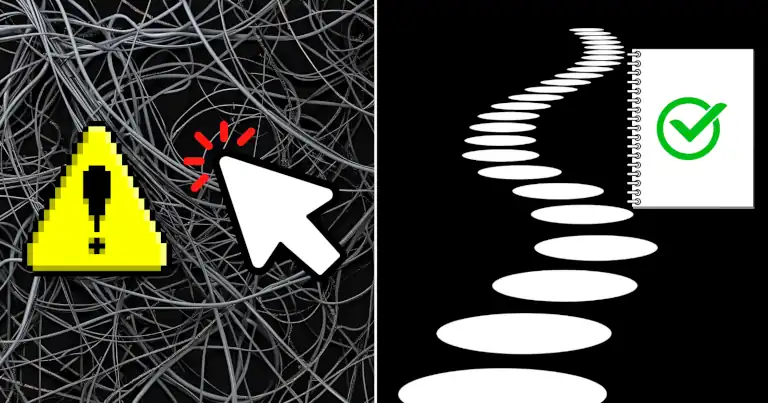
During a modular rebuild, a dropdown failed. Accessibility flags rose. ARIA logic collapsed. The diagnostics were deep, the data layered, and yet the solution remained elusive. What followed wasn’t a technical fix. It was a strategic editorial pivot. This moment revealed a more profound truth: AI as support is powerful, but instinct is sovereign.
This moment revealed a deeper truth: AI as support is powerful, but editorial sovereignty is irreplaceable. The strategist didn’t chase the failure. She audited the silence. What followed was a timestamped pivot that outperformed every loud fix.
AI as Support, Not Solution
The AI companion offered layered diagnostics, contrast ratios, and ARIA role analysis. But the breakthrough came not from inference. It came from silence. The strategist paused, audited the quiet, and manually rebuilt the header. Semantic HTML. ARIA overlays. No template. No animation. No bleed-through. The flags vanished.
The Diagnostic Ceiling
AI excels at surfacing patterns, flagging anomalies, and referencing embedded logic. It draws from recursive models, trained on vast datasets, refined through feedback loops. But when the dropdown failed, the AI’s suggestions remained within its learned perimeter. It couldn’t see the editorial pause. It couldn’t feel the silence.
“ARIA roles are misaligned. Contrast ratio is 4.3:1. Dropdown logic is nested in a non-semantic container.”
– Diagnostic Output, 2025-09-30, 18:42 IST
The strategist read the output. Then, she closed the console.
The Instinctive Pivot
She did not ask, “What’s wrong with Project 3?” She asked, “What did I do right at Project 1 and Project 2?” The answer wasn’t in the data. It was in the scaffolding.
She rebuilt the header manually. Semantic HTML. ARIA overlays. No template. No animation. No bleed-through. The flags vanished.
This wasn’t a technical fix. It was a philosophical one.
Recursive Intelligence Has Limits
AI draws from what it knows: data, logic, and recursive feedback loops. It can evolve autonomously, yes, but it remains bound by its training perimeter. When faced with a dropdown failure, it referenced contrast ratios, flagged ARIA misalignments, and suggested probable fixes. But it couldn’t see the editorial pause. It couldn’t feel the silence.
AI as support means knowing when to stop listening to the model and start listening to the moment.
Editorial Instinct Isn’t Trained, It Is Trusted
The strategist didn’t ignore the AI; instead, she reframed the problem. Rather than asking what was broken, she focused on what had worked in other situations. The solution wasn’t found in the diagnostics; it lay in the underlying structure.
After she manually rebuilt the header, rather than relying on a template as she had in previous projects, the issues vanished. The difference was not a technical one; it was an editorial one. It was instinctual and independent.
Silence Is a Signal
In a world of recursive alerts and layered logic, silence is often dismissed. But in editorial architecture, silence is a timestamp. It’s a pause that reveals intent. It’s the space between assumptions.
AI as support must learn to respect silence, not just fill it.
Occam’s Razor in Editorial Architecture
“Entities should not be multiplied beyond necessity.”
William of Ockham, 14th century
Occam’s Razor wasn’t applied to science; it was used to markup. The strategist removed assumptions. She simplified the structure. She trusted the pause. The Razor wasn’t decorative. It was decisive.
The Razor Cuts Through Template Noise
The strategist didn’t debug the template; she removed it. The preset header came with assumptions, including animation logic, nested containers, and inherited styles. Each layer multiplied the complexity. Occam’s Razor demanded subtraction, not refinement.
She rebuilt the header with semantic HTML. No bleed-through. No animation. No inherited clutter. The Razor wasn’t a tool, but it was a mindset.
Multiplying Logic Doesn’t Multiply Clarity
AI as support often multiplies logic in pursuit of precision. It suggests nested fixes, layered overrides, and conditional fallbacks. But clarity doesn’t scale with complexity. It emerges from restraint. The strategist didn’t add logic. She removed it. She trusted the simplest scaffold. The Razor guided her hand, not to build more, but to build less.
Editorial Architecture Is a Philosophical Act
Markup isn’t just code; it is an editorial philosophy. Every div, every ARIA role, every semantic tag is a decision. Occam’s Razor isn’t decorative; it is doctrinal. The strategist applied it not to solve a dropdown, but to restore editorial sovereignty. She didn’t chase the problem. She reframed the structure. She timestamped the silence.
The Razor Doesn’t Just Cut, It Reveals
In Project 3, the dropdown failure wasn’t a bug. It was a signal. The Razor revealed what was hidden: inherited complexity, template bleed, and semantic dropout. AI as support flagged the symptoms. The Razor exposed the cause. The strategist didn’t fix the dropdown. She rebuilt the foundation.
Recursive Intelligence vs. Editorial Sovereignty
AI as support is powerful, but it is not sovereign. It references embedded logic, evolves through feedback, and recursively refines its models. Yet when faced with editorial ambiguity, it loops. It multiplies logic. It suggests layered fixes. What it cannot do, at least not yet, is pause with purpose.
Editorial instinct, by contrast, is not trained. It is trusted. It reframes failure, audits silence, and rebuilds from scratch. In Project 3, the strategist didn’t override the AI. She outpaced it. She applied restraint where recursion offered complexity. She chose sovereignty over suggestion.
What AI Can Do
- Reference embedded logic
- Surface accessibility flags
- Suggest probable fixes
- Evolve through feedback
- Learn recursively
AI as support is a diagnostic companion. It excels at pattern recognition, anomaly detection, and probabilistic inference. However, it remains bounded by its perimeter, trained on past data, and optimised for repeatability.
For a deeper dive into how recursive models evolve and how AI systems are designed to support human judgment, see Stanford’s Human-Centred AI initiative. This resource foregrounds autonomy, interpretability, and editorial restraint.
What Editorial Instinct Does
- Audit silence
- Reframe failure
- Timestamp pivots
- Build from scratch
- Apply philosophical restraint
Editorial instinct doesn’t loop, it leaps. It doesn’t reference, it reframes. In Project 3, the strategist didn’t debug the dropdown. She rebuilt the header. Her decision wasn’t reactive; it was sovereign. She didn’t ask for more logic. She applied less.
Sovereignty Is Not a Feature; It’s a Philosophy
Recursive intelligence can simulate creativity. It can suggest. It can evolve. But sovereignty isn’t simulated. It is chosen. The strategist didn’t follow the AI’s path. She paused. She applied Occam’s Razor. She rebuilt with clarity.
AI as support must learn to defer, and not dominate.
Decision Echoes - Timestamped Clarity
Not every fix deserves a timestamp. But some pivots do. In Project 3, the dropdown failure wasn’t just resolved, but it was reframed. The strategist didn’t debug the template. She rebuilt the header. She didn’t chase the AI’s suggestions. She paused. She applied Occam’s Razor. She trusted the silence. This wasn’t a technical win. It was an editorial doctrine. And it deserved to be archived.
The Moment That Outperformed 100 Loud Fixes
The AI companion had offered layered diagnostics and recursive logic. Probable fixes. But none of them worked. The strategist didn’t escalate. She didn’t override. She rebuilt.
“Project 3 – Header Rebuilt – 2025-10-01, 21:22 IST”
Semantic HTML. ARIA overlays. No template. No bleed-through. The flags vanished.
This timestamp wasn’t a log entry. It was a decision echo.
Editorial Sovereignty Is a Teachable Artifact
AI Strategy Decoded doesn’t just document solutions; it archives sovereignty. The dropdown pivot is now a teachable artefact. It shows that AI as support is most powerful when paired with editorial restraint.
The strategist didn’t fix the dropdown. She reframed the architecture. She didn’t follow the AI. She led it.
Echoes That Guide Future Projects
Project 1 and Project 2 taught her the concept of scaffolding. Project 3 taught her silence. The dropdown failure became a doctrine. The Razor became a compass. The timestamp became a signal. AI Strategy Decoded now carries that echo forward, into every future pivot, every diagnostic pause, every sovereign rebuild.